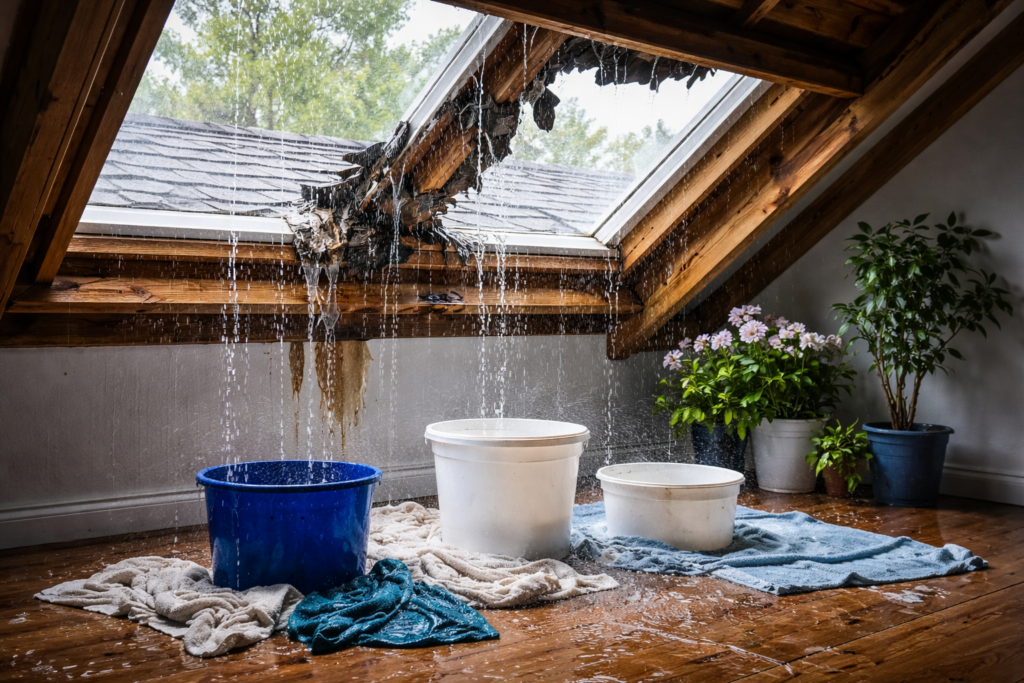
Every spring, we get a wave of calls that all start the same way: “I noticed a stain on my
ceiling this morning.” Sometimes it’s a small drip. Sometimes it’s a puddle. Either way, the
roof was probably failing long before the homeowner ever knew it.
Spring rain doesn’t create roof problems. It exposes them.
Here’s what’s actually happening under your shingles right now, and what you can do before
a minor issue turns into a $10,000 repair.
Why Spring Is Prime Time for Leaks
Winter is brutal on roofs. Ice dams, freeze-thaw cycles, and heavy snow load all stress the
materials, flashings, and seals on your roof for months. By the time spring arrives,
everything is fatigued. Then the rain comes.
The most common entry points we find during spring inspections:
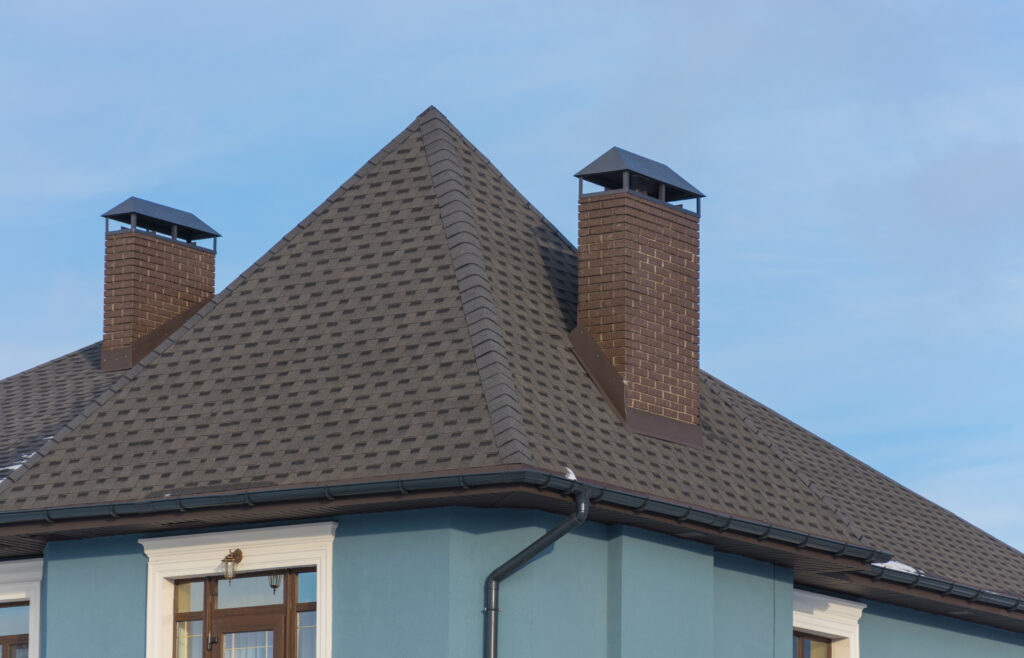
Flashings. The metal strips around your chimney, skylights, vents, and valleys are the #1
culprit. They expand and contract all winter, and the sealant around them cracks. Water
finds that crack immediately.
Shingle edges and valleys. Water running down your roof hits the valleys hard. If the
shingles there are cracked, curling, or missing granules, that water is getting underneath.
Gutters and fascia. Clogged or sagging gutters cause water to back up against the
roofline. Over time, that water infiltrates the fascia board and works its way into the decking.
This one hides for months before you see damage inside.
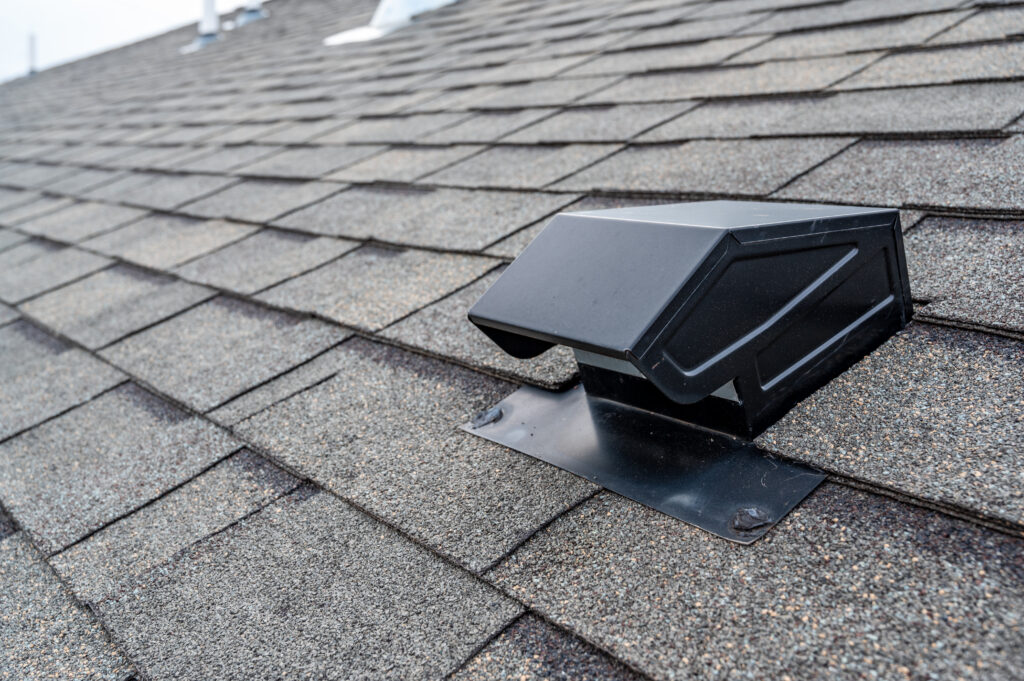
Pipe boots and vent seals. The rubber collars around plumbing vents degrade over time,
especially after hard winters. A cracked boot is one of the sneakiest leak sources because
the water travels far from the entry point before showing up on your ceiling.
Ice dam damage. If you had ice dams this winter, there is a real chance water forced its
way under your shingles before it could drain. That water may have soaked your decking or
insulation and is sitting there right now.
The Stain on Your Ceiling Isn’t the Problem
By the time you see a water stain, the moisture has already traveled from the entry point,
through your decking, through your insulation, across a rafter or two, and finally onto your
drywall. What you’re looking at is the end of a journey, not the beginning.
That’s why DIY patch jobs usually fail. Homeowners find the stain, go up in the attic, see a
little daylight, put some caulk on it, and call it done. Two weeks later the stain comes back.
The actual entry point was three feet away.
Finding the true source of a leak takes experience, the right conditions, and sometimes a
hose and a second person inside the attic. It’s not guesswork, but it does require knowing
what to look for.
What a Spring Inspection Actually Covers
A proper inspection isn’t a guy on a ladder glancing at your ridge line. At Tristate Exteriors,
we go through:
The full roof surface — shingle condition, granule loss, cracking, curling, and blistering
All penetrations — every pipe boot, vent, and HVAC stack
Flashing at every transition — chimney, dormers, valleys, skylights, walls
Gutters and drainage — pitch, seams, downspout discharge locations
Attic access when possible — checking for daylight, moisture staining, and insulation
compression
Fascia and soffit — early rot here is a warning sign of ongoing moisture intrusion
If we find something, we document it with photos and tell you exactly what it is, why it
matters, and what your options are. No pressure, no scare tactics.
When to Call Before You See a Leak
Most homeowners wait until water is actively dripping before picking up the phone. That’s
understandable, but it’s usually the more expensive approach.
Call us if:
Your roof is 15 or more years old and hasn’t been inspected recently
You had ice dams or unusually heavy snowfall this past winter
You can see shingles that are curling, buckling, or visibly missing from the ground
Your attic feels damp or smells musty
Your gutters are sagging or pulling away from the fascia
You noticed any ceiling stains, even old ones that appeared to dry up
A small repair done in April costs a fraction of what mold remediation and decking
replacement costs in August.
Schedule your spring roof inspection at tristatexteriorsllc.com
Don’t wait for the ceiling stain. That’s never a good time to start.